

Cart
0
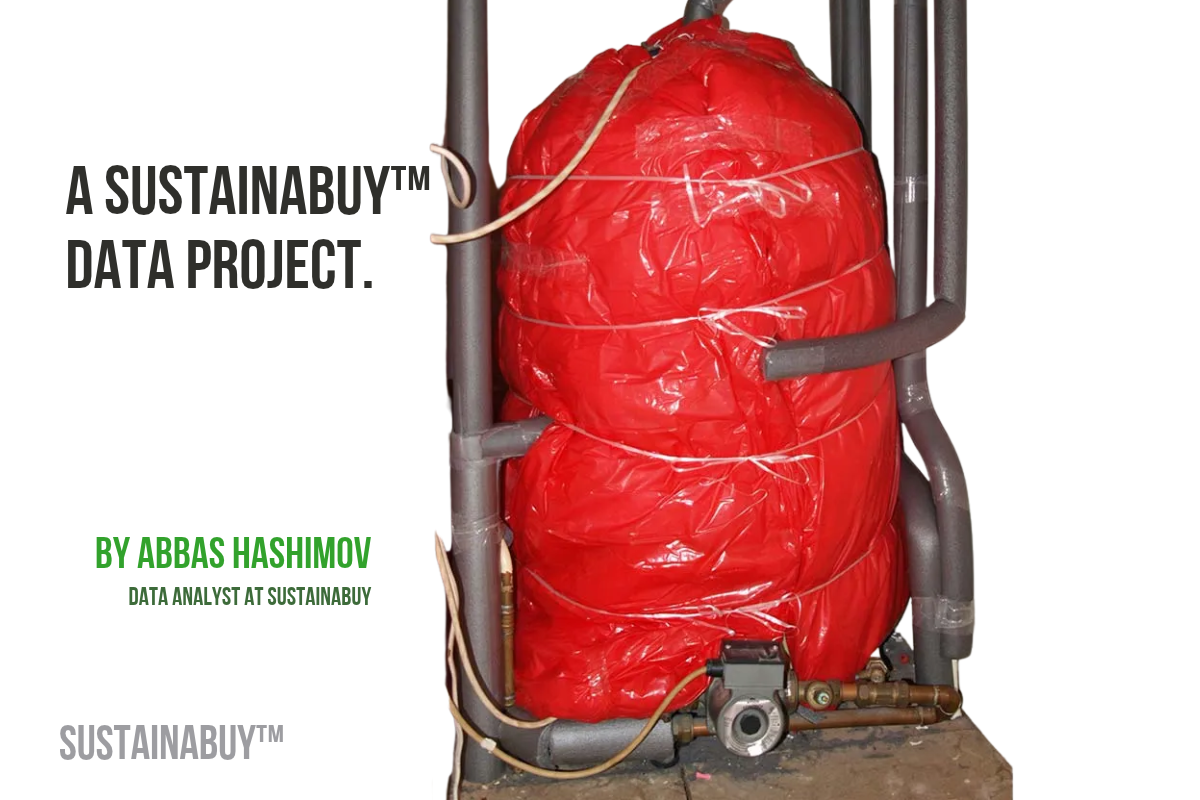
We modelled the heat lost from a standard UK hot water cylinder using the Government's own method for rating homes. On a bare cylinder, an 80 mm jacket pays for itself within weeks. On a cylinder that already has thin factory foam, it takes about a year.
A hot water cylinder is a tank of water kept at around 60 °C, often for the whole day, in a cupboard at room temperature. Heat flows steadily from the water into the cupboard, and the boiler or immersion heater has to replace it. This is known as standing heat loss, and you pay for it whether or not you use any hot water.
The rate of that loss depends almost entirely on how well the cylinder is insulated. A bare copper cylinder loses heat quickly. One wrapped in 80 mm of insulation loses a fraction as much.
The product
The jacket we sell is the Mangers four-piece hot water cylinder jacket. It is 80 mm thick, which is the minimum thickness the Energy Saving Trust recommends for a cylinder jacket, and it is sized for cylinders up to 1067 mm tall and 450 mm across. That covers a standard 1050 × 450 mm cylinder, one of the most common sizes in UK airing cupboards, which holds about 140 litres.
The method
Our figures come from the Standard Assessment Procedure (SAP), the method the UK Government uses to produce Energy Performance Certificates. SAP estimates a cylinder's daily heat loss from three things: an insulation loss factor that depends on the type and thickness of insulation, a correction for the size of the cylinder, and a correction for the average temperature the water is kept at.
We applied it to a 140-litre cylinder with a thermostat, and compared four cases: no insulation, an old 25 mm jacket, thin 25 mm factory foam, and each of those with our 80 mm jacket fitted. We then priced the difference at the Ofgem price cap rates for October to December 2026: 7.97p per kWh for gas and 26.32p per kWh for electricity. For gas, we assumed the boiler converts 85% of the gas it burns into hot water.
The numbers
| Your cylinder now | Heat saved per year | Yearly saving, gas boiler | Yearly saving, electric immersion | Time to pay back a £24.99 jacket (gas) |
|---|---|---|---|---|
| No insulation | 3,452 kWh | £324 | £909 | About 1 month |
| Old jacket, about 25 mm | 804 kWh | £75 | £212 | About 4 months |
| Thin factory foam, about 25 mm | 256 kWh | £24 | £67 | About 1 year |
For a cylinder heated by an electric immersion heater, the savings are higher because electricity costs more than three times as much per unit as gas. The payback periods are shorter in every case: about ten days for a bare cylinder, six weeks for one with an old jacket, and four months for one with thin factory foam.
As a cross-check, the Energy Saving Trust estimates that adding an 80 mm jacket to a cylinder with 25 mm of factory foam saves about £45 a year. That sits between our gas and electric figures for the same case.
Where it works, and where it does not
The largest savings are on cylinders that are bare or have an old, thin or damaged jacket. These are most common in older homes, and in airing cupboards that have not been looked at for many years.
Many modern cylinders are coated in hard factory foam, usually green, blue or yellow. If that foam is 50 mm or thicker, the cylinder is already well insulated and a jacket will make little difference. If it is thin, a jacket still helps, but the saving is the smallest in our table.
If your home has a combi boiler and no hot water cylinder, a jacket is of no use to you.
Assumptions and limitations
These are estimates, and the assumptions behind them matter.
- The model is general. SAP describes cylinder jackets as a type of product. It is not a laboratory test of this particular jacket.
- Not all lost heat is wasted. In winter, some of the heat lost from a cylinder warms the house. That heat is still paid for, but some of it would otherwise come from the central heating, so the real saving in winter is somewhat lower than shown.
- Cylinders vary. A smaller cylinder loses less heat, and one kept at a lower temperature, or heated for only part of the day, loses less again.
- Energy prices change. Ofgem resets the price cap every three months. When it changes, we update the calculator, and the savings move with it.
Conclusion
A hot water cylinder jacket is one of the cheapest energy-saving measures available. On a bare cylinder, or one with an old thin jacket, our modelling shows it repaying its cost within months. On a cylinder that already has thin factory foam, the saving is modest but still repays the jacket in about a year. On a modern, well-insulated cylinder, the money is better spent elsewhere.
You can enter your own cylinder and heating type into the savings calculator on the product page to see what it comes to.


