

Cart
0
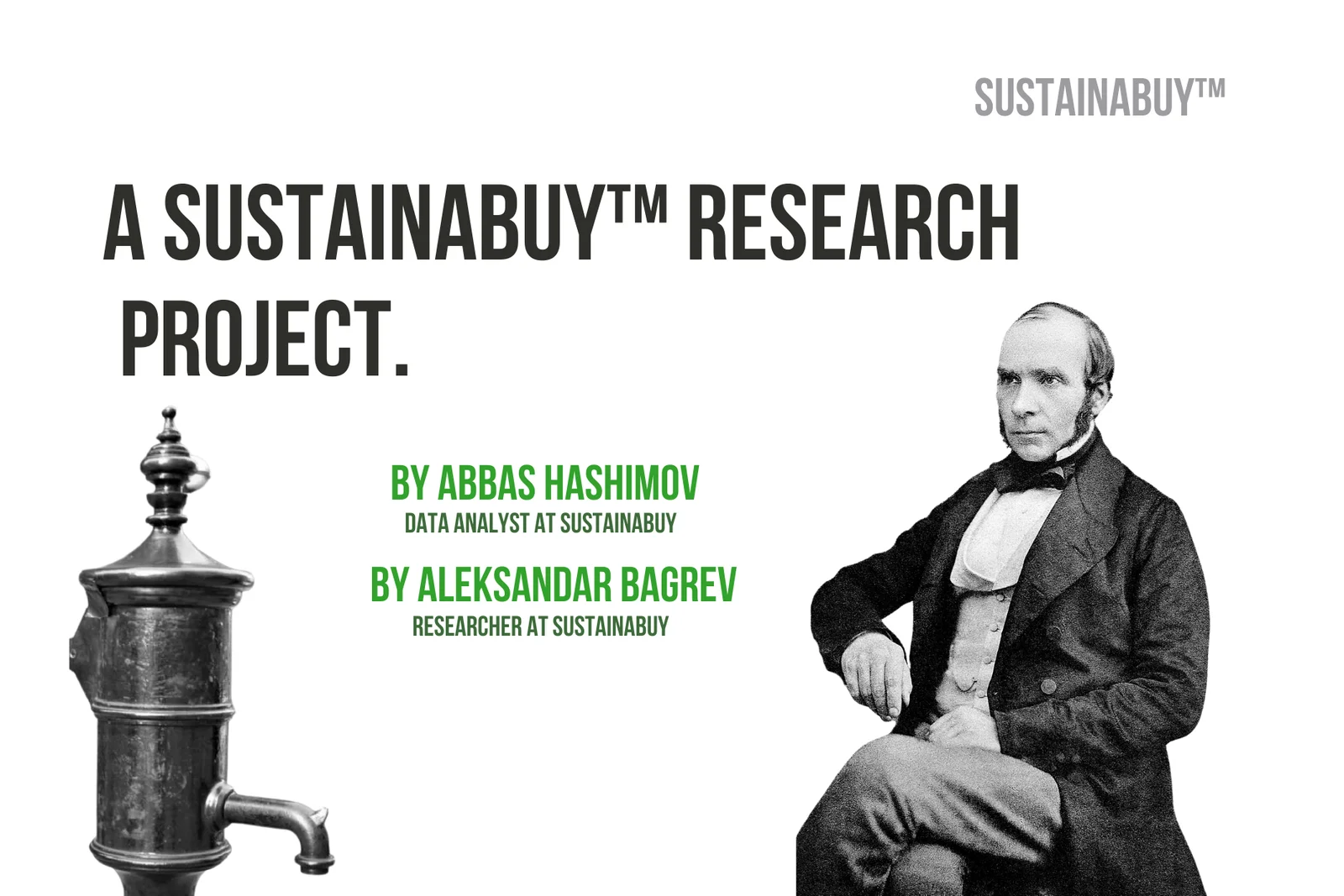

The great actress and humanitarian, Audrey Hepburn, once said, “water is life, and clean water means health”[1]. Yet, history repeatedly reminds us that not every glass we drink is safe. To better understand why modern water filtration is so important, we must look back to nineteenth century London – when a doctor named John Snow established the first scientific evidence linking contaminated water to disease.
The 1854 Broad Street Cholera Outbreak – a Historical Lesson
In the summer of 1854, a terrifying cholera outbreak swept through the crowded streets of London in what is now known as the ‘Broad Street cholera outbreak’. Within just ten days, over 500 people in the area of Soho succumbed to the disease[2]. While at the time the effects of cholera were known, those being uncontrollable vomiting, diarrhoea, and eventual death by dehydration[3], knowledge on the cause of the disease was limited.
Prior to the outbreak, most medical experts understood the spread of cholera through the miasma theory – the idea that disease rode on foul air from London’s open sewers[4]. Yet, Doctor John Snow disagreed, instead, suspecting that death flowed from the very water people drank.
John Snow and His Investigation
Born into a family of coal labour, John Snow left his family home at just fourteen years old to pursue medical training. In 1832, while working as a surgeon-apothecary apprentice, Snow had his first encounter with the disease; treating cholera patients in a mining village[5]. Having grown to become a licensed specialist by 1849, Snow published a paper named “On the Mode of Communication of Cholera”, where he first theorised cholera to be a waterborne disease, spread by contaminated waters[6]. Snow’s theory was met with criticism and dismissed by the medical elite and general citizenry for challenging the prevailing belief of the miasma theory[7].
The Broad Street Outbreak gave Snow his long-awaited chance to prove his theory. Stepping into the cholera-stricken neighbourhoods of Soho, Snow performed a field investigation by meticulously mapping out the personal address of each cholera victim. By doing so, a stark pattern was revealed: with the deaths grouping around one single public pump in Broad Street. Yet Snow went further, employing statistical analysis to consolidate his theory.

John Snow’s map, illustrating the concentration of deaths from cholera around the Broad Street public pump. Source: ‘On the Mode of Communication of Cholera’ by John Snow, 1855[8]
Snow utilised a statistical method similar to the modern-day Difference-In-Differences technique. With neither Snow being able to identify the specific pathogen (bacteria) causing the disease, nor germ theory having been established yet, Snow was unable to directly show that contaminated water causes cholera. Instead, Snow focused on how to show that some water is contaminated in the first place. Ingeniously, Snow figured out that if water pumped from upstream is cleaner than water pumped downstream, then that would reflect in the number of deaths from cholera in the area. Thus, Snow compared the cholera outbreaks in London districts supplied with water taken from upstream and downstream sections of the Thames. Snow found two water suppliers: one, the Southwark & Vauxhall Company, drew water from a polluted, downstream section of the Thames; while the other, the Lambeth Company, sourced water from a cleaner upstream stretch. When surveying the number of houses, and lethal cases of cholera in each district Snow received a clear dataset.

Source: ‘On the Mode of Communication of Cholera’ by John Snow, 1855.
Given the data, Snow was able to calculate the average number of cholera cases in the upstream and downstream company districts respectively. His study concludes that the difference in mean fatal cases between the two companies is over eight-fold! Thereby, Snow’s study revealed that cholera did indeed spread through contaminated water – providing the much-needed evidence to his theory. As a result, Snow’s evidence convinced the local authorities to remove the handle from the Broad Street pump, ending the cholera outbreak[9].
Snow’s Lasting Lesson
John Snow’s discovery marked the birth of modern epidemiology and changed public health forever. His work proved three critical points:
- Contaminated water spreads disease – even if the water looks clear.
- Prevention saves lives – cutting contamination at the source can stop outbreaks.
- Clean water is essential – without it, entire communities are at risk.
Today, we may no longer fear cholera in developed nations, but the principle remains the same – water quality matters.
Modern-Day Water Challenges in the UK
Despite the improvements in modern-day plumbing and sanitation, our family homes are still at risk of water contamination. With tap water oftentimes flowing through aging pipes and imperfect water sanitation systems, contaminants may seep into the water and find their way into your glass. Common issues in British tap water include:
- Chlorine and chemicals – added for sanitation purposes, but affecting overall smell and flavour.
- Heavy metals – such as lead, which may leach from aging pipes.
- Microplastics – small particles currently discovered in drinking water globally.
- Bacteria and parasites – uncommon, yet possible in weakened water sanitation systems.
Therefore, it is evident that John Snow’s fight remains pertinent in the present day; although, rather than cholera, we now face a new set of contaminants that can impact our long-term wellbeing.
How a Tap Filter Helps Today: TapSmart™ by Sustainabuy
Much like how John Snow transformed public health in the 19th century, modern technology empowers us to manage water quality in our homes. Our TapSmart™ tap water filter is designed to improve the taste and quality of the water from your kitchen tap.
Here is what sets it apart:
- Independently lab tested – free chlorine was reduced to undetectable levels and chloroform (a chlorine by-product) by about 65%, even after 3,000 litres. In a soak test, the filter added no lead, mercury, cadmium, arsenic or bacteria to the water.
- Better-tasting water – without the chlorine smell and taste.
- Easy installation – designed for UK households, requiring no tools or expertise to install.
- Environmentally friendly – a sustainable alternative to single-use plastic bottles.
- Cost-effective – each cartridge lasts 3,000 litres, about 0.6p per litre, so households switching from bottled water can save hundreds of pounds a year. See how much a tap filter can save.
A Toast to John Snow
In some way, every cup of water we drink today is a silent toast to John Snow – a man whose work denotes the importance of filtering what flows into your cup. Although his work was the breakthrough that marked the beginning of a future with cleaner water, there is still work to be done; ensuring that every drop of water in our family homes is clean and safe – safeguarding our health, and that of our loved ones.
Raise your glass to clean water. Discover the TapSmart™ Tap Water Filter Kit (available in 1.0 and 2.0 designs) and enjoy better-tasting water straight from your tap.
Frequently Asked Questions
What did John Snow discover about cholera?
In 1854, John Snow showed that cholera spread through contaminated water rather than “bad air”. He mapped the deaths in Soho around the Broad Street water pump and compared districts supplied by two water companies, finding far more deaths where water came from a polluted stretch of the Thames.
Is UK tap water safe to drink?
Yes. UK tap water is tightly regulated and generally safe to drink. People mainly filter it to improve the taste and reduce chlorine and its by-products. Lead can be a concern in older homes that still have lead pipes, typically those built before about 1970.
Does a tap filter remove chlorine?
A carbon-based tap filter is very effective at reducing chlorine. In independent lab testing, the TapSmart™ filter reduced free chlorine from 0.07 mg/L to below the detection limit (0.01 mg/L), even after 3,000 litres.
References
- UNICEF Australia. (2021). ‘The deeply personal reason Audrey Hepburn decided to work with UNICEF’. UNICEF Australia. Available from: https://www.unicef.org.au/stories/audrey-hepburn-goodwill-ambassador
- Creighton, C. (1894). ‘A History of Epidemics in Britain’. Cambridge University Press, p. 854. Available from: https://books.google.co.uk/books?id=7XsaAAAAMAAJ&pg=PA854
- Mayo Clinic Staff. (2025). ‘Cholera – Symptoms & causes’. Mayo Clinic. Available from: https://www.mayoclinic.org/diseases-conditions/cholera/symptoms-causes/syc-20355287
- Tulchinsky, T.H. (2018). ‘John Snow, Cholera, the Broad Street Pump; Waterborne Diseases Then and Now’. Case Studies in Public Health, pp. 77-99. Available from: https://pmc.ncbi.nlm.nih.gov/articles/PMC7150208/
- Ball, L. (2009). ‘Cholera and the Pump on Broad Street: The Life and Legacy of John Snow’. The History Teacher, pp. 105-119. Available from: https://www.jstor.org/stable/40543358
- Snow, J. (1849). ‘On the Mode of Communication of Cholera’. London: John Churchill. Available from: https://collections.nlm.nih.gov/ext/cholera/PDF/0050707.pdf
- Tsang, J. (2019). ‘A Public Health Detective Story: John Snow, Cholera, and the Germ Theory of Disease’. The Microbial Menagerie. Available from: https://microbialmenagerie.com/a-public-health-detective-story-john-snow-cholera-and-the-germ-theory-of-disease/
- Snow, J. (1855). ‘On the Mode of Communication of Cholera’ (2nd edition). London: John Churchill. Available from: https://archive.org/details/b28985266/page/n4/mode/1up
- Tsang, J. (2019). As reference 7.
Written by Abbas Hashimov, Data Analyst at Sustainabuy.


